
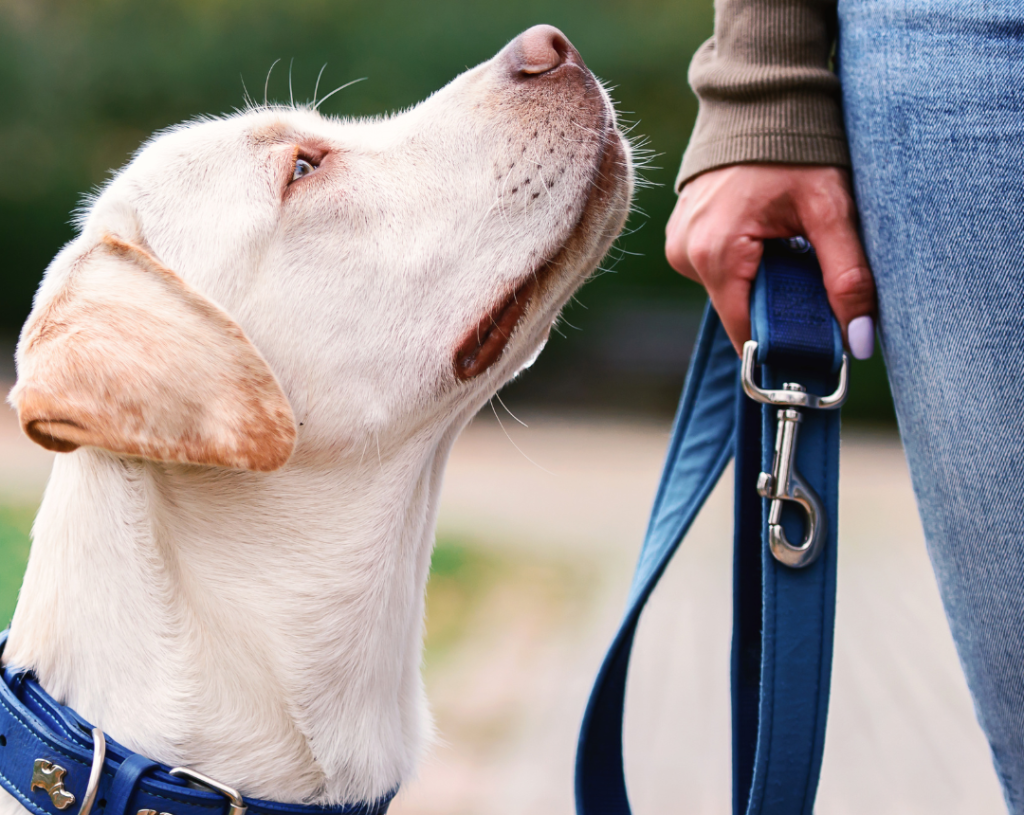
Basic obedience
Communication, cooperation and safety in everyday life
Basic dog obedience is much more than the dog learning the commands “sit”, “stay” and “come”.
The aim of training is to create a shared way of communicating between the dog and their human. For the dog to understand what we’re asking, to be able to work with us and to respond in different everyday situations.
What does basic obedience include?
Dog training in basic obedience can include skills that are genuinely useful in everyday life: sitting and waiting, coming when called, responding to their name, staying in place and being able to listen to us even when there are distractions.
We’re not just interested in them performing a command in a quiet room. We want them to gradually be able to use these skills outside the house too.
The walk is part of training
One of the most common issues for guardians is the walk.
The dog pulls on the lead, gets excited by other dogs, wants to greet everyone or struggles to focus when a lot is happening around them.
Lead training isn’t about the dog walking mechanically beside us. We want them to learn to move with us, respond to our communication and cope better with distractions.
Why is “come” so important?
Recall, meaning the dog coming when called, is one of the most important skills they can learn.
A good “come” isn’t just an obedience command. It can become an important safety tool in an unexpected situation.
That’s why recall is built gradually, with the right practice and in different environments.
Obedience needs to work in the real world too. A dog doesn’t live in a distraction-free environment.
They may come across another dog, a running child, a bicycle, a cat or a loud noise. The real challenge of training is for them to be able to listen and work with us while things are happening around them.
This doesn’t happen overnight. It’s built gradually, with the right guidance and according to each dog‘s abilities.
The human learns too
Basic obedience isn’t only about the dog.
The guardian learns to recognise their dog’s behaviour, to communicate more clearly, to use cues correctly and to create consistency in everyday life.
Because good training isn’t based on fear or blindly following commands. It’s based on cooperation and understanding.
Because in the end, basic obedience isn’t a matter of “control”.
It’s a way to learn to work better together.