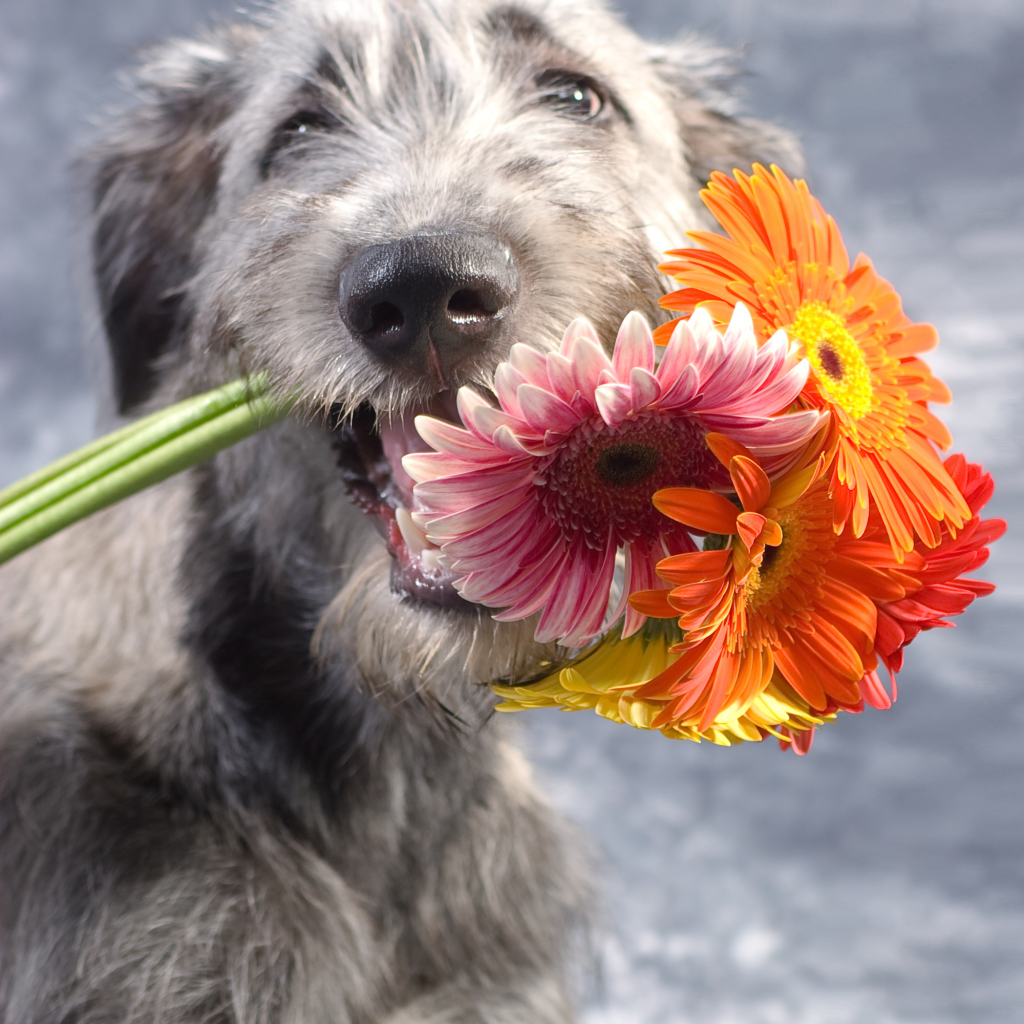
Just because a dog is on the street, in the park or at the next table doesn’t mean they’re available for petting, hugs and introductions. Before we approach a dog, we need to remember something very simple: they’re not ours.
Not every dog is available for petting
It’s a very familiar scene: we see a beautiful dog in the street and instinctively want to stroke them. Maybe they’re looking at us, maybe wagging their tail, maybe even coming towards us. But none of this necessarily means they want contact.
They may be scared, anxious, in pain, in the middle of training, or simply not in the mood to meet someone new. And of course, the same goes for their human. They may not want their dog to have contact with strangers, for whatever reason.
That’s why the simplest rule is also the most important: we ask before we approach.
Don't rush at them
Even if their human tells us we can stroke them, there’s no need to rush at the dog with open arms and excitement.
A stranger leaning over them, reaching out their hands or coming quickly towards them can feel quite overwhelming, especially for a more insecure or fearful dog.
We let the dog approach at their own pace and watch whether they really want contact.
“No” is enough
If their human tells us they don’t want us to stroke their dog, no explanation is needed.
There may be fear, a health issue, an allergy, training, a previous bad experience or simply a personal choice. We don’t need to know the reason to respect the boundary.
The same applies when a dog shows they don’t want contact. We don’t need to wait for them to growl or react strongly before giving them space.
And something very important: we don't feed someone else's dog
A treat may seem like an innocent gesture of affection, but we don’t know whether the dog has an allergy, follows a specific diet, is taking medication or whether their human is working on a particular behaviour.
Even with the best intentions, we don’t give food to a dog who isn’t ours without asking first.
Children need even more guidance
To children, a dog can look like the perfect new friend. But it’s important for them to learn from a young age that we don’t approach an unfamiliar dog without permission.
We don’t hug them, we don’t pull their tail or ears, we don’t put our face close to theirs and we don’t run straight at them.
Even a very sociable, friendly dog can get scared or feel pressured when they can’t move away.
A dog isn't public property
Just because a dog is beautiful, cute or very friendly doesn’t mean they’re available to everyone.
They don’t have to greet every person they meet. They don’t have to accept every stroke. And they don’t need to become our best friend just because we met them on a walk.
Respect towards a dog often starts with something very simple: we give them the choice.
And in the end, the best thing we can do when we meet a dog we don’t know is to remember that at the other end of the lead there’s a person who knows their animal better than we do.
We ask. We wait. We respect. Because we may really want to stroke a dog, but that doesn’t mean they want to be stroked.