Why does my dog bite?
Learn the possible causes, which signs to watch for and how to handle biting safely.
A dog bite can frighten us, especially when it comes from our own dog. Why did it happen? Was it fear, pain or irritation?
The truth is that there is no single explanation when a dog bites. To understand what happened, we need to look at the circumstances, the dog’s body language and everything that came before.
Biting can be linked to different causes:
- Fear and insecurity: A dog may bite when they feel threatened or unable to get away from something that scares them.
- Pain: A dog in pain may react when we touch or lift them. If the behaviour appears suddenly, a veterinary check is needed.
- Irritation: They may not want to be touched while resting, or may find certain kinds of contact difficult.
- Guarding food or objects: They may react when someone approaches something they consider important.
- Tension and frustration: When a dog is highly aroused or can’t get away from a difficult situation, they may react by biting.
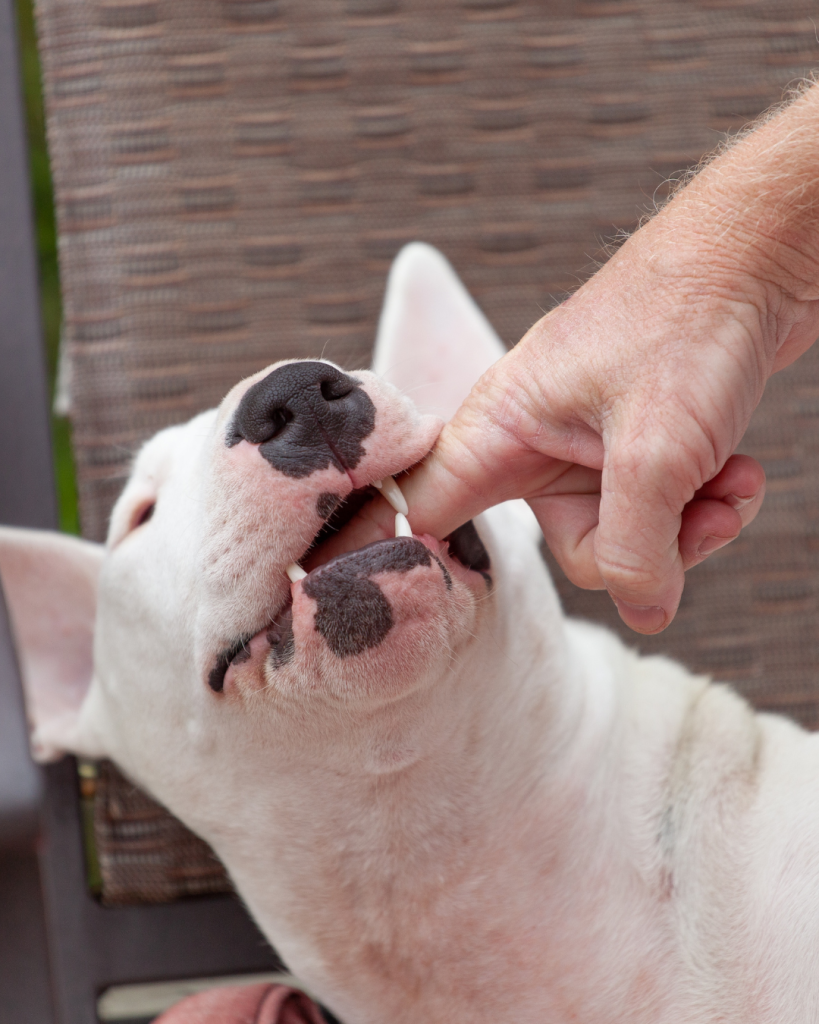
- Play: Some bites happen during play. We still need to look at the intensity and the context in which they happen.
Every case is different. The same behaviour can have a different cause in two different dogs.
What happened before they started biting
To understand why a dog bites, it isn’t enough to look only at the moment of the bite.
Did we get too close? Did we touch them when they didn’t want it? Did we try to take something away from them? Were they already feeling fear or tension?
The context gives us important information about what may have caused the behaviour and how we can handle similar situations in the future.
Did we miss the signs?
Turning the head away, trying to move away, freezing or growling may show that the dog isn’t comfortable.
These signs don’t always all appear, or in the same order. But it’s important to recognise them and respect the dog’s need for space.
Growling is a warning signal, not a behaviour to punish. If we punish a dog for growling, it doesn’t mean their discomfort has gone away.
What do we do when a dog bites?
Our first priority is everyone’s safety.
We create distance. We stop the contact and don’t push the dog to put up with a situation they find difficult.
We don’t punish or provoke the dog. Shouting, physical punishment and trying to take something from them by force can increase the tension.
We limit risky situations. If there are children at home, we make sure there is safe separation and never leave them unsupervised with the dog.
We ask for help when needed. If the biting keeps happening, has caused an injury, or we’re struggling to manage the situation, we consult a professional dog trainer with the right experience. If pain is suspected or the behaviour appeared suddenly, we see a vet.
We don’t need to wait for a serious incident before asking for guidance.
Does it mean my dog is aggressive?
The fact that a dog bites isn’t enough on its own to label a dog as aggressive. We need to look at their history, the circumstances of the incident and the factors that may be affecting their behaviour.
This doesn’t mean we underestimate how serious a bite is. On the contrary, we treat the incident with care, without jumping to conclusions and without ignoring the risk.
We don't just want them to stop biting
We need to understand what the dog is finding difficult, which situations trigger the behaviour and how we can help them respond differently.
We don’t expect a dog to tolerate every touch or every situation. We learn to recognise their limits, manage the environment properly and work on the cause of the behaviour.
Because in the end, it isn’t enough to try to stop the biting. We need to understand why it happens.