
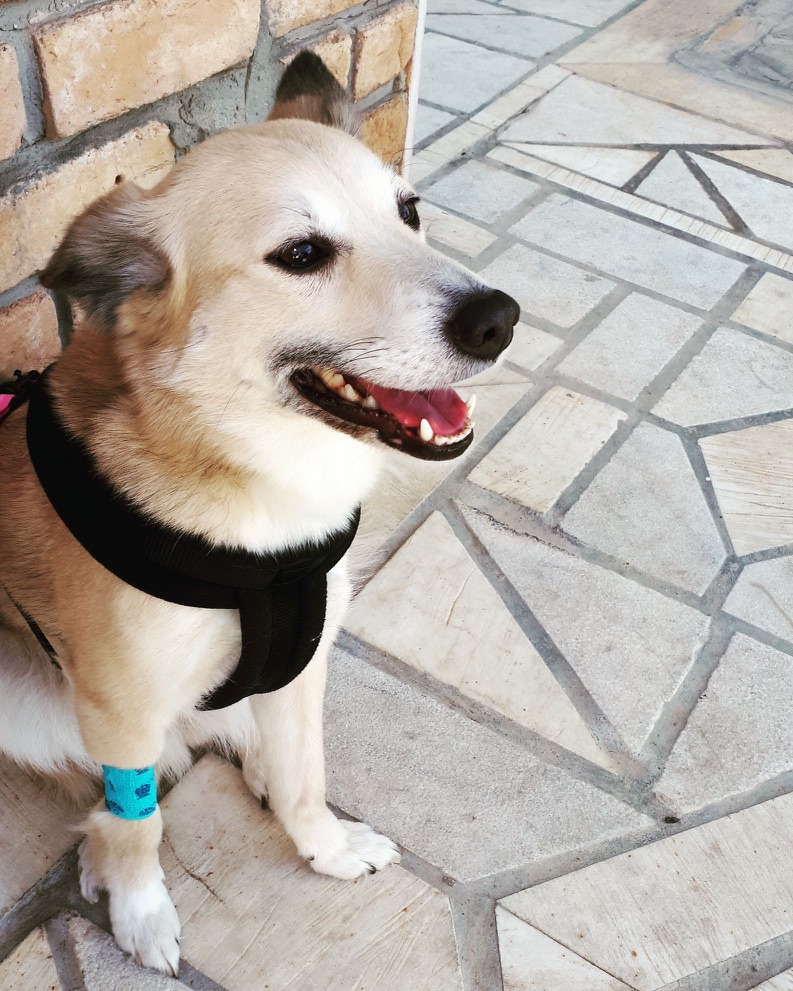
Neutering is a topic with many opinions and even more questions. “When should I neuter my dog?”, “will they calm down after neutering?”, “is it different for male and female dogs?” — the answer isn’t the same for every dog.
Will they calm down after neutering?
Let’s start with the most common myth: no, neutering doesn’t automatically turn a lively dog into a calm dog.
Some behaviours linked to reproductive hormones may decrease after neutering. For example, in male dogs, behaviours such as roaming in search of a female or certain types of marking may decrease. But behaviours that have already become habits won’t necessarily disappear after the procedure.
If a dog is full of energy, bored, pulls on walks or hasn’t learned how to relax, neutering won’t do all that work on its own.
That’s where training comes in.
Male dogs and neutering
In male dogs, neutering may reduce certain behaviours influenced by hormones, but it doesn’t mean every male dog will change character.
A dog who has learned to pull on walks, bark, chase stimuli or not respond when called doesn’t just need a procedure. They need proper training and consistency in everyday life.
Female dogs and spaying
For female dogs too, the decision about spaying needs to be individual. Spaying can offer important health benefits, while the right timing depends on factors such as size, breed, age and individual risk factors.
So there isn’t one age that’s ideal for every female dog or every male dog. Modern veterinary guidelines put more and more emphasis on making the decision on an individual basis.
Neutering doesn't replace training
If our dog has a behavioural difficulty, we shouldn’t expect neutering to solve it.
Dog training is what helps us teach a dog how to respond to their environment, how to communicate with us and how to handle different situations.
The same goes for puppy training. We don’t wait for them to grow up or be neutered before we start teaching them basic skills, boundaries, socialisation and good communication.
Basic dog training is built through everyday practice — not through a surgical procedure.
When should neutering be done?
This is something worth discussing with your vet rather than deciding based on one general age that applies to everyone.
The AAHA guidelines vary their recommendations according to the dog’s expected adult size, sex and other health factors. In large-breed dogs especially, the timing may need to be more individualised.
So what actually changes after neutering?
Some behaviours linked to hormones may change. But the dog’s personality doesn’t magically change, and not every behavioural difficulty disappears. Our dog is still the same dog — with the same character, the same experiences and the same learned behaviours.
That’s why, if we want a dog who listens to us, can relax, walks calmly on walks and can handle their environment, training remains essential.
And if we have a puppy, puppy training starts long before any conversation about neutering.
Neutering is an important health decision.
But it isn’t the solution to every behaviour problem — and it certainly isn’t a substitute for training.