
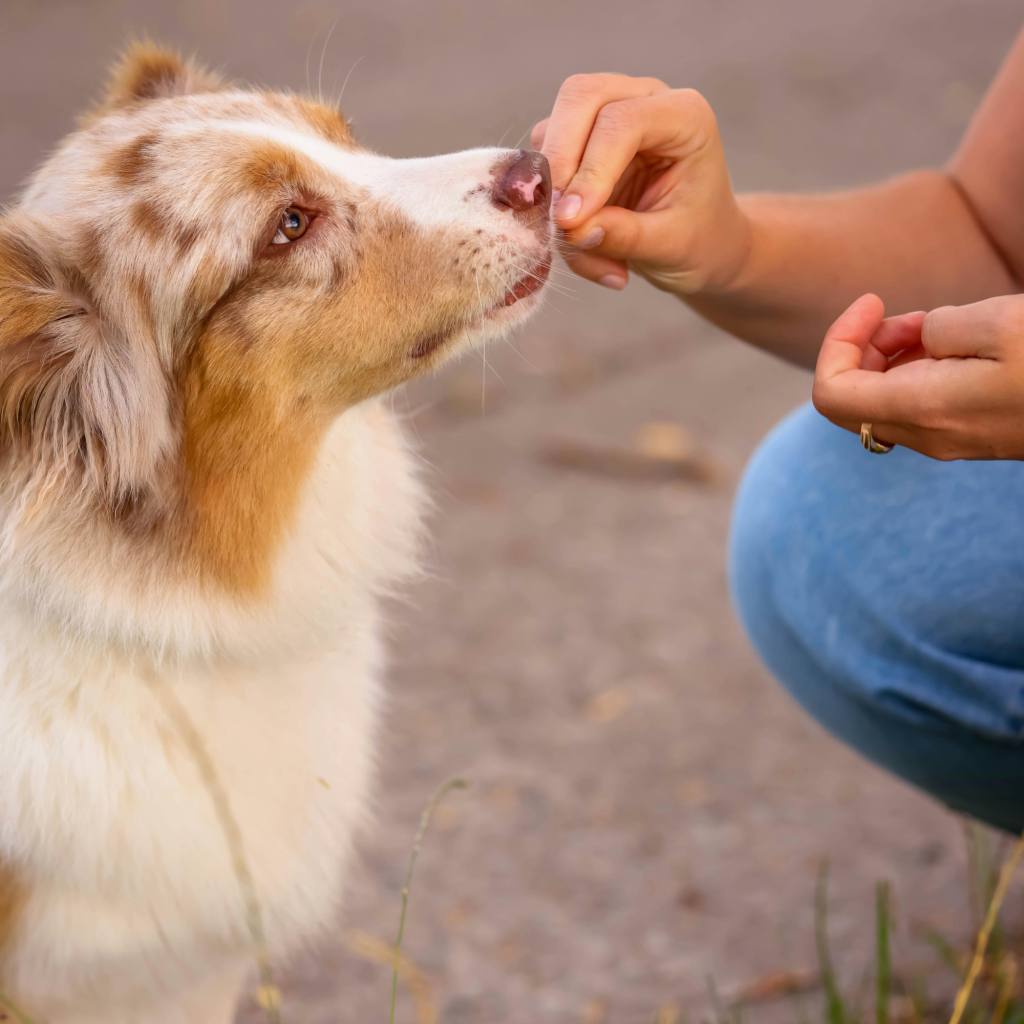
Socialisation is one of the most important parts of dog training, especially during the first months of a dog’s life. But it doesn’t mean our dog has to love every person and every dog they meet — it means they learn to handle the world around them safely and with confidence.
What does dog socialisation really mean?
When we talk about dog socialisation, we mean getting a dog used to everything that will be part of their everyday life: people, dogs, sounds, cars, different environments, surfaces, objects, handling, the vet, grooming and much more.
Proper socialisation is an important part of dog training, because it helps us raise a dog who can cope with different situations without needing to be afraid or react to everything new.
Puppy training starts early
Puppy training isn’t only about “sit”, “come” and the basic commands.
From the moment a puppy starts discovering the world, every new experience can become part of puppy training.
Meeting different people, sounds, environments and surfaces, as well as getting used to the vet, grooming and having their body handled, are all parts of well-rounded socialisation.
But that doesn’t mean we should throw them into everything at once. Puppy socialisation needs to happen gradually and in a way the puppy can cope with.
Socialisation doesn't mean “say hello to everyone”
One of the most common mistakes is believing that a socialised dog should want to meet every person and every dog they come across.
That isn’t the goal.
A well-socialised dog can walk past another dog without needing to greet them. They can be among people without asking everyone for a cuddle. They can hear a noise and carry on with their walk.
Dog socialisation isn’t about how many people and dogs they’ve met. It’s about how they can handle being around them.
Experiences need to be positive
In dog training, it isn’t enough to simply expose a dog to something new. What matters is how they experience it.
If a puppy is afraid of a person and we push them towards that person so they “get used to it”, we may end up reinforcing their fear instead of reducing it.
Puppy socialisation needs to respect their limits. If we see that something is hard for them, we can increase the distance, lower the intensity or simply give them more time.
This is also one of the most important elements of good dog training: we don’t push the dog to cope with something that is beyond what they can manage right now.
We don't only socialise with people and dogs
Socialisation is much bigger than meeting others.
A puppy gradually needs to get to know different sounds, cars, motorbikes, lifts, stairs, different surfaces and environments. They need to see people of different ages and appearances and get used to situations they’re likely to encounter later in life.
They also need to learn that the vet, nail trimming, baths, grooming and having their body handled can be normal parts of everyday life.
These experiences are an important part of both puppy training and basic dog training later on.
Basic dog training isn't just commands
Basic dog training is important. We want our dog to respond to their name, to come when called, to walk with us, to wait and to communicate with us.
But basic dog training doesn’t mean much if it stays in a quiet room and doesn’t carry over into real life.
Socialisation, coping with stimuli and the ability to stay functional in different environments are just as important parts of dog training.
Socialisation doesn't end after the first months
The first months are especially important for puppy socialisation, but the process doesn’t stop there.
A dog keeps learning throughout their life. New people, new environments, changes in routine and different experiences keep shaping the way they see the world.
That’s why dog training is an ongoing process. It isn’t finished when the puppy grows up or once they’ve learned the basic commands.
Every dog has their own limits
Not all dogs have the same temperament.
One puppy may approach everything with confidence, while another may need more distance and time.
Socialisation isn’t a competition.
If our dog shows us that something is difficult for them, we listen to what they’re telling us and adjust the process. Moving away from a trigger doesn’t mean the training has failed. It means we respected their limit.
So what do we actually want to achieve?
We want a dog who can go out for a walk and meet a person without needing to greet them. Who can see another dog and keep going with us. Who can walk into a new environment and take a little time to explore it without panicking.
We don’t necessarily want a dog who loves everything and everyone.
We want a dog who feels safe enough to handle the world around them.
And that, in the end, is the essence of good socialisation and one of the most important foundations of dog training.