
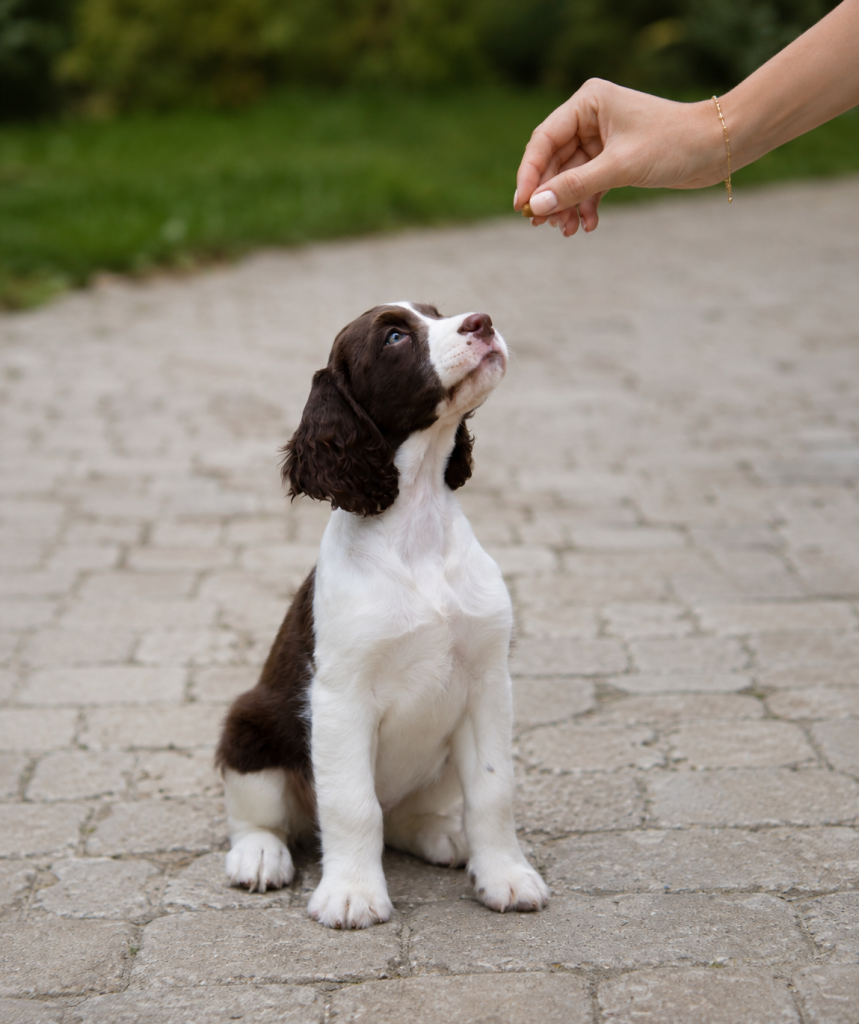
Puppy training
The right foundations from the start
A puppy at home means joy, play and endless cuddles. But it’s also a big change to everyday life. Pee and poop in the house, biting, barking, jumping up at people, chewing things up or struggling to be left alone are some of the most common issues new guardians face.
The aim of puppy training isn’t to “make the puppy obedient”. It’s to help them understand the world around them, learn what we expect from them and gain the skills they need for everyday life.
Puppy training at home
In the beginning, lots of things need guidance.
Puppy toilet training, for example, isn’t a matter of “bad behaviour”. The puppy needs to learn where to pee and poop, gradually gain control and understand the household routine.
The same goes for biting, chewing things, barking or jumping up at us. We don’t expect a puppy to know on their own which behaviour is appropriate. We show them what they can do and create the conditions for them to succeed.
And outside the house?
Training doesn’t stop at the door.
Lead walking, people, dogs, cars, noises, different environments and new experiences can be a lot for a little puppy.
That’s why puppy socialisation doesn’t mean meeting as many people and dogs as possible. It means learning to face new stimuli safely and gradually being able to stay calm in everyday life.
Learning to be alone, too
Another very common issue is a puppy struggling to be left alone at home.
Learning to spend time without their human is an important skill for a puppy. We don’t just leave them alone and wait for them to “get used to it”. We gradually build their ability to feel safe and cope with our absence.
Why start training early?
Because it’s much easier to build the right habits from the start than to try to change behaviours later, once they’ve become part of everyday life.
Puppy training is really training for the human too: we learn to recognise what the puppy needs, to communicate with them and to guide them in a clear, understandable way.
The goal isn’t a “perfect” puppy.
The goal is to raise a dog who can live safely, adapt to their everyday life and have a good relationship with their human.
Because training isn’t just about a puppy learning commands.
It’s about learning how to live with you.