
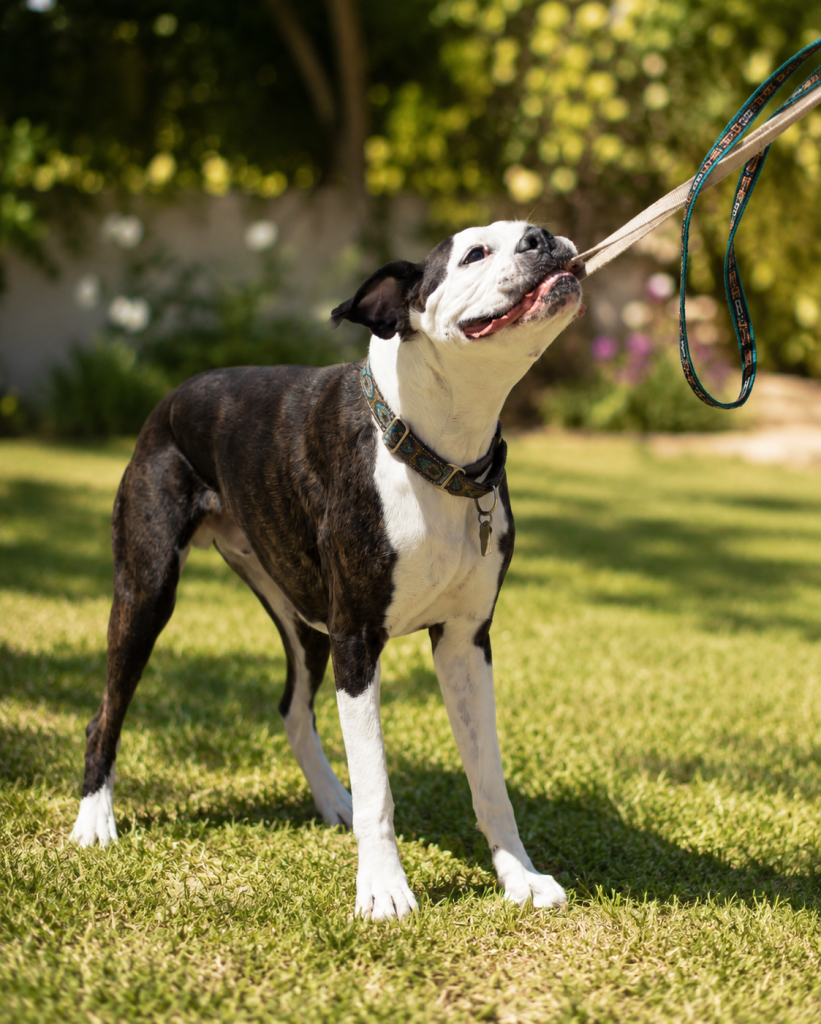
Dog behaviour management
When we want to understand what's going on
Sometimes everyday life with a dog gets difficult.
The dog pulls on the lead, barks at other dogs or people, is afraid of certain situations, bites, reacts strongly or struggles to settle.
In these cases we’re not just talking about basic dog obedience. We need to understand the behaviour and what lies behind it.
Why does the dog behave like this?
A behaviour doesn’t appear out of nowhere.
A dog may bark because they’re afraid, pull on walks because they find it hard to cope with stimuli, or react strongly to another dog because they feel they have no other option.
This doesn’t mean every difficult behaviour has the same cause.
That’s why dog behaviour management starts with observation: what happens before the behaviour, what the dog does at that moment and what follows.
Fear isn't stubbornness
A dog‘s fears can show up in many ways.
A fearful dog may try to move away, freeze, bark, pull on the lead or react strongly.
The reaction may look like “bad behaviour”, but for the dog it may be a way of coping with something they find difficult.
In these cases, the aim of dog training isn’t simply to stop the reaction. The aim is to help the dog feel safer and find different ways to respond.
When walks have become difficult
“My dog pulls on walks.”
“I can’t walk past other dogs.”
“My dog barks on walks.”
These are some of the most common behaviour problems guardians face.
When everyday life changes
A change in our life can affect a dog‘s behaviour too. Moving house, a new work schedule, the arrival of a baby or a new family member, even adding a second dog, can change their routine and sense of safety.
A dog may then become more restless, bark more, struggle to be left alone or show behaviours they didn’t have before. That doesn’t necessarily mean they’re “broken” or have suddenly become difficult. They may simply need time, the right management and guidance to adjust to the new reality.
But the answer isn’t always more obedience or more commands. We first need to understand what that particular dog finds difficult and adapt the training to their needs.
And when there is aggression?
Aggression in dogs is an issue that needs special care.
It isn’t enough to tell the dog “no” or try to suppress their reaction. We need to assess the behaviour, the triggers that cause it and the context in which it appears.
The goal is to create safer conditions and better communication, while gradually working on the behaviour.
In serious cases of aggression or intense fear, working with the right professional and, where needed, with a vet is especially important.
We don't just want it to stop
If a dog barks, we don’t just want a dog who doesn’t bark.
We want to understand why they bark.
If they pull on the lead, we don’t just want them to stop pulling. We want them to learn to cope better with the walk and the stimuli around them.
That’s the difference between simply suppressing a behaviour and managing and modifying behaviour.
Every case is different
There’s no single solution that fits all dogs.
Age, experiences, environment, daily routine, the relationship with their human and the actual cause of the behaviour all play an important role.
That’s why dog training for behaviour problems needs a personalised approach.
The goal isn’t to “fix” a dog.
It’s to understand the dog behind the behaviour and help them cope better with the world around them.