
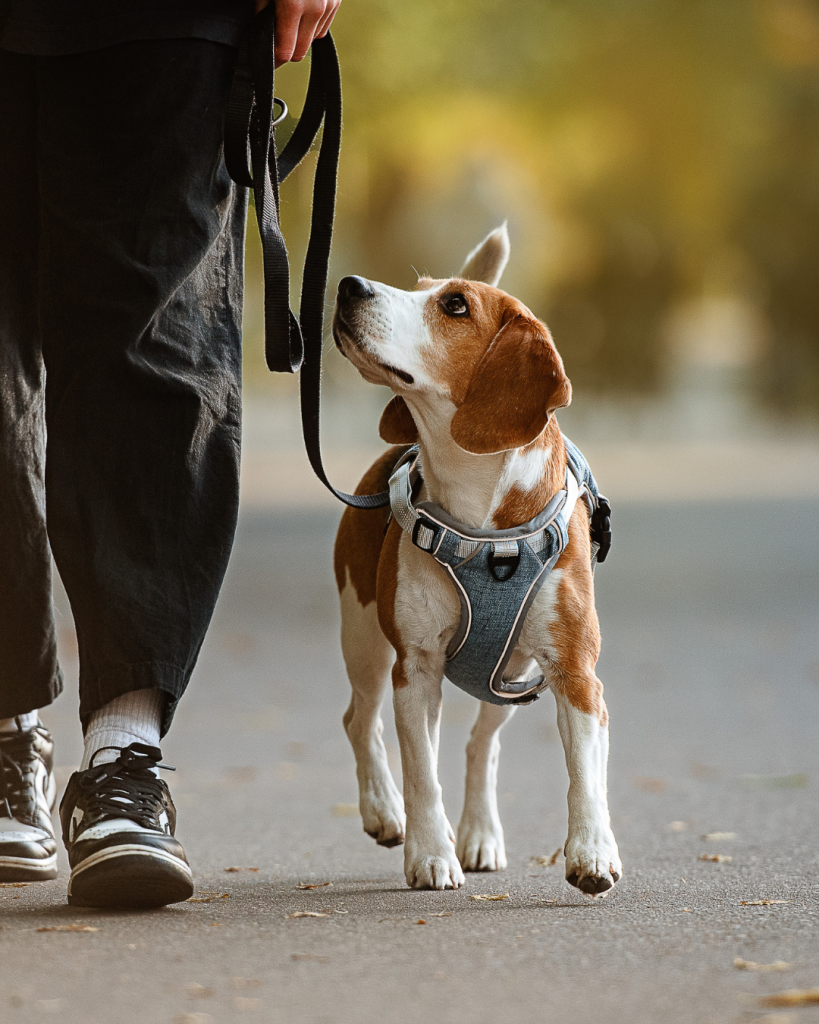
A walk is much more than a quick trip outside for our dog‘s needs. It’s time for exploring, moving, sniffing, play and mental stimulation — and every dog needs their own combination.
Every dog has different needs
Not all dogs need the same walk. A young Malinois, a Golden Retriever and a senior dog have completely different needs in terms of movement, intensity and duration.
The breed and its traits are an important part of the picture, but not the only one. Age, physical condition, personality, daily routine and each dog‘s individual temperament play just as important a role.
That’s why there’s no single “right” walk that suits everyone.
Physical exercise matters
Dogs need to move. Depending on the dog, this might be a walk, free running in a safe, controlled space, play with a ball or tug, or another activity that suits their needs and abilities.
Not every walk needs to be a race. But there does need to be enough physical activity during the day for their body to move and let off steam in an appropriate way.
And a word of caution: more exercise doesn’t always mean better exercise. Especially with puppies, senior dogs or dogs with musculoskeletal problems, the intensity and type of activity need to be adapted to their needs.
The mind needs work too
A dog doesn’t only get tired from running.
Foraging, scent games, training, solving small problems and exploring new environments all offer important mental stimulation.
For many dogs, a few minutes of meaningful mental activity can matter far more than simply walking a few extra kilometres.
And let them sniff
Sniffing isn’t a waste of time, and stopping every few metres doesn’t necessarily mean our dog is “being lazy” or holding up our walk.
Smell is one of the main ways dogs gather information. Through scents they explore their environment, learn who has passed by a spot, what happened there and what’s around them.
So sometimes it’s worth putting our own schedule aside for a moment and giving them time to sniff.
We don't just want a tired dog
The goal isn’t for them to come home so exhausted that they collapse.
The goal is to have met their needs: to have moved, explored, sniffed, played and used their brain.
A dog who has had the right physical and mental outlet is far more likely to come home and be able to truly relax.
Because in the end, a good walk isn’t measured only in kilometres. It’s measured in everything our dog got to do while they were out.